Local utility office

Rule holder: City of Santa Clara Water & Sewer Utilities FOG Program

Santa Clara operators often search by city name, but City of Santa Clara Water & Sewer Utilities FOG Program is the office that sets the local grease, hauling, and paperwork rules on this page.

Santa Clara FOG rules

Santa Clara grease trap and interceptor rules

Santa Clara, CA grease trap rules for restaurants: interceptor approval, pump-out timing, manifests to keep on site, and hauler checks.

City of Santa Clara Water & Sewer Utilities FOG Program Utility Last verified 2026-04-07
Authority
Santa Clara requires food service establishments discharging grease-laden wastewater to the sanitary sewer to follow the City's FOG Control Program through plan check, inspection, and record review.
Proof on site
Santa Clara requires grease control device maintenance records to stay on site for at least three years, and interceptor receipts must include pumping company details, service date, device details, waste volume, and disposal location.
Likely fail trigger
Santa Clara says uncorrected, repeated, or serious FOG violations escalate to increased enforcement and fines, and missing three-year records is itself a sewer ordinance violation.
Next action
Verify the installed interceptor type against the city approval letter.
Do this next

Verify the installed interceptor type against the city approval letter.

Use the rest of the page to confirm the local rule and proof burden, but start with the next move below.

First move

Verify the installed interceptor type against the city approval letter.

Stage this proof

Santa Clara requires grease control device maintenance records to stay on site for at least three years, and interceptor receipts must include pumping company details, service date, device details, waste volume, and disposal location.

Overall verdict
City of Santa Clara Water & Sewer Utilities FOG Program (Utility)

Santa Clara publishes a clear local service cadence and verification workflow, so this page can stay specific without falling back to generic national advice.

Authority Summary

Santa Clara requires food service establishments discharging grease-laden wastewater to the sanitary sewer to follow the City's FOG Control Program through plan check, inspection, and record review.

Keep on site

Santa Clara requires grease control device maintenance records to stay on site for at least three years, and interceptor receipts must include pumping company details, service date, device details, waste volume, and disposal location.

Official requirement

Local Interceptor Requirements

Official requirement
Santa Clara requires food service establishments discharging grease-laden wastewater to the sanitary sewer to follow the City's FOG Control Program through plan check, inspection, and record review.
Official requirement
City of Santa Clara Water & Sewer Utilities FOG Program approves the interceptor setup through plan review.
Official requirement
Santa Clara's FOG materials say grease interceptors need routine professional pumping and grease traps need regular maintenance with logs kept near the device, with service timed to the actual grease load and local ordinance requirements.
Keep on site

Inspection-Ready Proof

fact_check

Santa Clara requires grease control device maintenance records to stay on site for at least three years, and interceptor receipts must include pumping company details, service date, device details, waste volume, and disposal location.

Store this where staff can reach it quickly during an inspection.
fact_check

The interceptor approval letter or equivalent plan-review record.

Store this where staff can reach it quickly during an inspection.

fact_check

A service history that explains why the current cadence is safe.

Store this where staff can reach it quickly during an inspection.

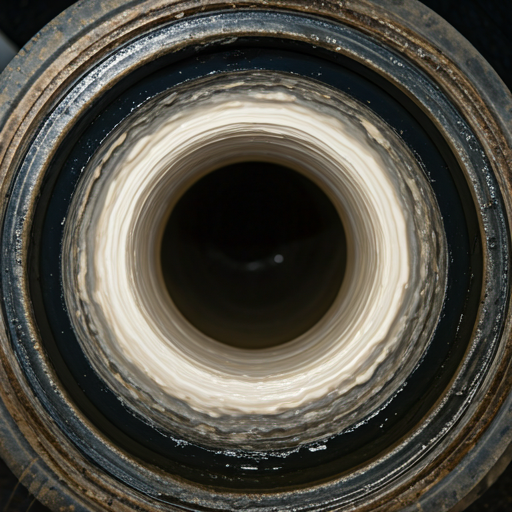
Grease pipe
Inspection and enforcement risk

Common Inspection Failures

Santa Clara says uncorrected, repeated, or serious FOG violations escalate to increased enforcement and fines, and missing three-year records is itself a sewer ordinance violation.

Inspectors commonly flag this when records are missing, overdue, or incomplete.

High risk
A missing manifest trail weakens every pump-out claim.

Inspectors commonly flag this when records are missing, overdue, or incomplete.

High risk
Overdue service or an unclear interceptor setup can push the issue back to the operator.

Inspectors commonly flag this when records are missing, overdue, or incomplete.

High risk

Need a hauler check before the next pump-out?

Start with the city's official list and then confirm the service company still covers grease waste and manifest handling.

Santa Clara publishes an official hauler or preferred-pumper list, but it does not recommend or endorse any provider on that list.

Source stack

Official sources for this page

Last verified: 2026-04-07

  1. City of Santa Clara Water & Sewer Utilities | Tier 1 | 2026-04-07

    Santa Clara's FOG Program says commercial food service establishments are regulated through plan check and inspection, must submit the food service checklist for grease-laden wastewater, and can use the city-published grease pumpers and haulers list as a courtesy verification tool.

  2. City of Santa Clara Water & Sewer Utilities | Tier 1 | 2026-04-07

    Santa Clara requires grease trap and interceptor maintenance records to remain on site for a minimum of three years and says missing records may result in fines under the local sewer ordinance.

  3. City of Santa Clara Water & Sewer Utilities | Tier 1 | 2026-04-07

    Santa Clara's grease trap maintenance sheet recommends professional grease hauling, requires cleaning logs near self-cleaned traps, and ties poor trap maintenance to fines under the local sewer use ordinance.

  4. City of Santa Clara Water & Sewer Utilities | Tier 1 | 2026-04-07

    Santa Clara's grease interceptor maintenance sheet tells operators to use professional pumping service, fully pump and scrape the interceptor, and treat missing records as a sewer ordinance risk that can lead to fines.